
Take right-wing religion’s teaching that people are basically so evil and lost that they deserve eternal, abusive punishment. Add its effectiveness at convincing people of their innate evil because they’re prepared for it through childrearing methods that punish inherently bad children. Enforce such messages with political leaders whose solution to problems is more punishment. The result: adults’ desperate need for a fix to provide relief from self-denigrating, self-abusive feelings.
That’s what made the high of being righteous so addictive. Now, with the political success of the right-wing, addictive religion found a new fix, the high of winning politically.
Prior to the rise of their political aspirations, huddling together in congregations seemed enough for the addicted. In their meetings and services they could be with those who felt the same misery and heard that there was nothing they could do to be “saved.”
These were not recovery groups, providing support to overcome the addiction. They were more like opium dens.
Their preachers dealt the high. They did nothing to make people feel as if they were, or could in themselves become, worthwhile. In fact, they convinced them they were so evil that they shouldn’t trust their own intuitions, thoughts, and positive feelings about themselves. Trusting yourself was put down as “New Age.”
Their preachers and theologians told them they could only be acceptable because another Being really, really, really would accept them in spite of who their evil. If people accepted that notion, it was then okay to feel joy.
They could also feel as if the “lost,” people out there, were the ones with problems, not them. They’d lap up “prophecy,” which would assure them that they’d come out winners in the end and that those who didn’t participate in their addiction would be proven wrong by being “Left Behind.”
As they became more addicted, the fix became more desperate. Services were the gathering together of addicts for another drink, another line. But addictions are progressive, so where would they get even heavier doses?
The movement of the religious right-wing into politics, which most previously rejected as too involved with “the world,” was a new drug, a stronger drink. Righteous political wins for their religious position became the new blessed relief from facing the painful notion that they are, as their hymns reminded them, “wretches,” “worms,” “without [even] one plea,” and “deeply stained within.”
Logically, one would think that believing they’re so evil would cause them to be less judgmental, more sympathetic with others. After all, one can actually find that notion in their Bible. So, in the midst of their righteous wins, they do sometimes talk sympathetically, saying to LGBT people: “We’re all sinners.”
But addictions are not logical, and looking for the logic in them, ALANON members know, is a waste of time. What drives this need for winning is the high. They can’t face what they believe about their rotten selves too long or they just couldn’t handle it it’s bad enough to probably require anti-depressants and hospitalization.
When they win government and electoral approval for their doctrines, those aren’t acts of faith at all. Their trust is not in their Higher Power. It’s in government and the electorate. It’s in the feeling that they have approval of a majority of voters. None of that has to do with “What Would Jesus Do.”
The fix of these wins has become an obsession. It’s meant to convince them they’re right and okay. As a “high” it can never last. They’ll fall back into their feelings of fear and loathing. So they desperately need more approval, more wins. They’ve gotten themselves dependent upon these wins.
The need for a cause to win is the seeking of approval by projecting their evil onto others. Addictions remove the sense of responsibility. It’s never the addict’s fault. Addicts must be convinced they’re right. Feminists, “activist judges,” LGBT people, liberals, atheists, wiccans, whomever, must be understood as the real causes of the addict’s problems.
Sadly, many addicts never come to until they’ve hit bottom and destroyed their lives and the lives of their families and acquaintances. Some go into recovery. There is, after all, a Fundamentalists Anonymous.
So, dealing with the addiction requires saving oneself first, not the addict. It often involves the sadness of watching the addict crash and burn.
Now, it’s going to take awhile for addictive religion to hit bottom. It’s on a new drug and it has mainstream approval.
But does it have our support? Are we the enablers? Are we making excuses for the addict? Are we still trying to find the logic in what they do? Are we wasting time trying to understand their “real” motives and intentions? Are we covering up for the addict?
Are we emotionally unable or unwilling to speak truth to the addict, saying the addiction is wrong, sick, and destructive? Are we unable to separate from the addiction? Are we unwilling to join the equivalent of support groups like ALANON or form Mothers Against Abusive Religion?
Do we have a positive enough self-image to refuse to be abused by others who won’t face the addiction — such as politicians who treat us like crazy but rich relatives whom they come to for support but hide in the closet when people want to know who those relatives are? Are we willing to face the fact that we’ll still be affected by the addiction and, therefore, have to live our lives in the light of that fact, that we have to protect ourselves and our safety? Are we able to say that they, not we, are the problem?
Once we’ve named an addiction, it’s our choice how we live with an addict. It’s our choice about whether we seek an addict’s love and support. And it’s our choice, knowing that addictions are hard to overcome, whether we’re in it for the long haul because, in the end, we want to stop addictions from hurting everyone.
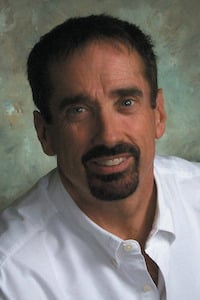
Professor Emeritus of Religious Studies at the University of Kansas where he taught for 33 years and was department chair for six years, Robert N. Minor (he/him), M.A., Ph.D is the author of 8 books as well as numerous articles and contributions to edited volumes. He is an historian of religions with specialties in Biblical studies, Asian religions, religion and gender, and religion and sexuality. His writing has been published in Whosoever since 2005 and he continues to speak and lead workshops around the country. In 1999 GLAAD awarded him its Leadership Award for Education, in 2012 the University of Kansas named him one of the University’s Men of Merit, in 2015 the American Men’s Studies Association gave him the Lifetime Membership Award, and in 2018 Missouri Jobs with Justice presented him with the Worker’s Rights Board Leadership Award. He resides in Kansas City and is founder of The Fairness Project.