
Without music I would be dead. I wondered if that statement was too strong – an overstatement of facts, but it isn’t. I truly believe that I would not be here today without the saving power of music.
I have always surrounded myself with music. As a kid I spent most of my allowance at the Turtle’s Records and Tapes on Clairmont Road in Atlanta on albums by everyone from the Ramones to the Beatles. I still possess a rather impressive collection of vinyl.
By far, my favorite band was The Who. I know, deep down inside, that it was the album Quadrophenia that saved me from certain suicidal despair when I was in my late teens and early 20s. “I’m One” is still one of my anthems today.
I got a Gibson
Without a case
But, I can’t get that even tanned look on my face.
Ill-fitting clothes I blend in the crowd,
Fingers so clumsy Voice too loud.But I’m one.
That described me to a “T” in those days – complete with the Gibson SG – without a case. Despite all my ill-fitting clothes and societal awkwardness I always felt that I was “one.” There was never any division in my spirit. I was one – balanced, true to myself no matter how society viewed me or how I viewed it. I was one. I am one to this day, because it was music that spoke to my soul and gave me that unifying voice of spiritual peace.
In high school, I wrote for the newspaper and would frequently quote the angst filled lyrics of The Jam while lecturing my fellow students on their penchant for being pretentious posers. I had then, and still have now, little use for fakers, people who say one thing when they are alone with you, but are totally different in the crowd. You remember them from your high school days, right? Or maybe you’re still dealing with them in the workplace!
I would admonish my fellow students to follow their hearts – to always be true to themselves or as The Jam sang in their song Ghosts:
Why are you frightened – can’t you see that it’s you
That ain’t no ghost – it’s a reflection of you
Why do you turn away – an’ keep it out of sight
Oh – don’t live up to your given roles
There’s more inside you that you won’t showBut you keep it hidden just like everyone
You’re scared to show you care – it’ll make you vulnerable
So you wear that ghost around you for disguise[…]
One day you’ll walk right out of this life
And then you’ll wonder why you didn’t try
To spread some loving all around Old fashioned causes like that still stand Gotta rid this prejudice that ties you down
My column won accolades from the faculty, but little in the way of the actual friendship or admiration of my peers. It seemed they didn’t like criticism that struck so close to home. So, it seems to be to this day. My message remains the same – be yourself – or as Ralph Waldo Emerson wrote in Self-Reliance:
Trust thyself: every heart vibrates to that iron string.
That iron string is music – with its mysterious soul speaking magic – its uncanny ability to take me from the depths of despair to the height of creativity and passion. Without music I would be dead – not so much physically maybe, but emotionally and most definitely spiritually. I think we all would.
Music for the gay Christian journey
Music is often an essential part of our journeys, which may be especially true for the gay, lesbian, bisexual and transgender community. Music has the power to speak to us in our oppression, to give us hope, or sometimes simply an escape, from our feelings of loneliness or despair.
No musicians know this better, perhaps, than gay and lesbian Christian musicians who struggle to find their place in the musical universe in a liminal state between mainstream Christian music and the gay world of dance mixes. For them, music is a refuge, a place of mystery and strength that they seek to share.
“I can’t imagine my life without music or without singing,” said Jason, half of the talented duo of Jason and deMarco. “When we’re onstage singing it’s not like performing. You get lost in the Holy Spirit and it’s not you up there any longer you’re just being a conduit for the music and the message that’s being translated. For me, music has been there all throughout my journey.”
DeMarco agrees, noting that music is the only way he knows to freely express the depth of himself.
“We all need an outlet and singing was definitely the outlet of my life,” he said. “Other people like to kick a soccer ball or swim – for me when I sing that’s how I get to release everything that I’ve gathered inside. I feel safe to be vulnerable when I’m singing. I can connect with my emotions. When speaking in daily life I’m a little more guarded so when I’m up there singing I just let my heart out and it’s really a wonderful experience.”
Music has been an intimate companion for both Jason and deMarco as they grew up. DeMarco recalls being told by his mother how he would come home from Catholic nursery school singing the day’s hymns at the top of his lungs. Jason, after ruining a hunting trip with his dad, became his mom’s singing partner in her tours of local nursing homes and hospitals near their Maryland home.
For them, music is a way to connect, not just with the spiritual side of themselves, but with their listeners.
“It’s one thing to sing songs that you just enjoy singing, but then to sing songs that really connects to your own life experience makes a big difference,” Jason said. “When someone hears a song it’s about connecting to that song because you’ve been there or you are there. When you hear the lyrics of a song it’s telling your story.”
Creating a blank slate
Christian lesbian singer Marsha Stevens understands that idea of connection very well. Stevens wrote her first song, “For Those Tears I Died” at the age of 16 and has been a powerhouse in the field of gay Christian music for years.
“Music creates this huge common denominator,” she said. “We all have such different stories but after every concert what I hear constantly is ‘you told my story’.”
Her song, now codified in some Christian hymnbooks (and later purged by many more after she came out), opened Stevens’ eyes to how music deeply affects those who hear it. Over the years she has heard many different interpretations of what her song means to other people and is surprised to find that each person has a different take on what the song means – it speaks to them on an individual basis.
“I was impressed by how a song created a blank slate for people to feel permission to feel their passions,” she said. “Even though our internal experiences might be worlds apart, somehow we found this common language for being able to communicate it and be passionate about it and give ourselves permission to feel that passion.”
Even though our particular passions may be very different from another person’s passion, Stevens believes music speaks across the specifics and touches people so deeply because music’s themes are universal.
I took a songwriting class years after I was published,” she recalled, “and, I remember thinking that every song that every person in the room wrote was, ‘I really thought it was love and it wasn’t and they dumped me,’ and how heartbreaking that is. Of course, I would come to this class thinking ‘let me tell you about a love that will never end.’ Somehow they’re two sides of the same coin.”
That’s the coin explored in the new book by Indigo Girl Emily Saliers and her dad Don Saliers – that split between Saturday night music and Sunday morning music and how each form of music can be sacred, speaking directly to our souls.
“Sometimes a religious community signs what is eternally true, sometimes nothing but self-congratulations. Sometimes popular music deals out nothing but banality; sometimes it strikes at the heart of our hopes and fears. There are many surprises both inside and outside the church. Saturday night and Sunday morning are always in an ongoing conversation, sometimes quarreling, sometimes in mutual respect. The cliché is that they are somehow incompatible.”
Stevens agrees with the Saliers that music speaks to a common yearning in people – but must walk a careful line between sacred and profane.
“I’m constantly surprised at how almost all the music that I hear has the same sort of longing, even if it’s going to be a shampoo that changes your life, still we’re looking for a change in our life. Our longings that come out in our songs are the same thing,” she said. “Sunday morning music tends to offer a little more solution and Saturday night music offers more of the pain and longing. That can make Sunday morning a little too pat and Saturday night music a little too despairing.”
Which makes the “ongoing conversation” between secular and sacred music all the more important – so both forms of music can be kept in a proper perspective and the mystery and depth of each form can be preserved and further explored.
The healing power of music
Music can also have great healing qualities, giving people the ability to touch the things in their lives that cause them pain and to begin healing those wounded place. For the gay, lesbian, bisexual and transgender community, often those wounds are deeply spiritual.
Jason and deMarco see much of their musical mission as that of healing.
“There’s an energy behind music and tones,” said Jason. “It’s the energy behind the tones and the music and the beat that physically affects people. To me music is a tool for healing because as the tones resonate and move people they can’t help but open themselves up because they’re being affected by that.”
That healing can also extend to bridging the gap between the GLBT and straight communities. So often, artists like Jason and DeMarco and Stevens are pigeonholed as “gay singers” who only really have something to offer to GLBT communities. Recently, Stevens has been shocked by comments from United Church of Christ pastors who have invited her to sing.
“They tell us ‘their welcome to come and use our building’ but they don’t come to the concerts because they’re not gay,” Stevens explained. “But, afterward, many UCC pastors have said, ‘Wow, if I had known it would be like this I would have had you sing for the whole congregation.’ It didn’t register that feeling left out was going to apply to alcoholics or those who were divorced and who had felt marginalized from the church for any number of reasons. They tied into our estrangement in ways that were unexpected for them.”
That connection is a source of healing the rift that has sprung up between GLBT Christians and their straight counterparts – even among those more liberal straights who are fighting for full GLBT acceptance in mainstream churches.
As poet Kahlil Gibran wrote: “Music is the language of the spirit. It opens the secret of life bringing peace, abolishing strife.”
Music has the power to heal, the power to bring us together, the power to bring out our best emotions, our unmet needs, our deepest passions. It has the power to move us to do good, and alternately move us to do our worst when misused. Music challenges, soothes, motivates and brings us a range of emotions. It speaks to us at our deepest level, touching the innermost secrets of our souls. Music is mystery. Words cannot capture it, even words set to music. Let music touch you deeply, let it move you, let it guide you in your search for God.
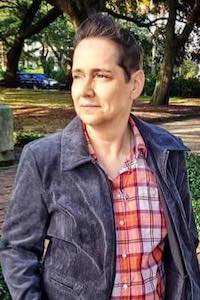
Founder of Motley Mystic and the Jubilee! Circle interfaith spiritual community In Columbia, S.C., Candace Chellew (she/her) is the author of Bulletproof Faith: A Spiritual Survival Guide for Gay and Lesbian Christians (Jossey-Bass, 2008). Founder and Editor Emeritus of Whosoever, she earned her masters of theological studies at Emory University’s Candler School of Theology, was ordained by Gentle Spirit Christian Church in December 2003, and trained as a spiritual director through the Omega Point program of the Episcopal Diocese of Atlanta. She is also a musician and animal lover.