
I promise to love and care for you,
Through times of joy and times of sorrow,
To rejoice when you are happy,
And grieve when you suffer,
To share your interests,
And hopes for the future,
To try to understand you,
Even when I do not agree,
To do all in my power
To help you be your true self,
The person God calls you to be,
In all this, I ask God’s help,
Now and in the days to come.
Words like these are said every day somewhere in the world. Two people fall in love, two people decide to make a public declaration of their love and commitment to each other, two people thumb their noses at the long odds of staying together for a lifetime, two people who might be named Bruce and Theresa, Don and Kathleen, Kevin and Tat, or the two women who actually spoke these words to each other, Beverly and Jamie. If you happen to be a man and a woman, these words, and the “I dos” and the marriage that follow them, are embraced and celebrated by not only your friends and family but the state as well. Once your wedding license is signed, you receive 1,049 rights and benefits from the federal government and up to 400 rights and responsibilities from the state you live in.
If you happen to be a man and a man, or a woman and a woman, these words are followed by just as strong a commitment, just as strong a love, just as strong a bond as anyone’s. But instead of being embraced by society, you are scorned and discriminated against, instead of being granted equal rights and responsibilities that come with marriage, you are told your love, your commitment doesn’t count and you are granted nothing.
Today we are looking at one of the most divisive, the most controversial issues of our time — same sex marriage. Depending on your perspective, granting the rights of marriage to homosexuals is the most ridiculous and most repugnant act our government could take or the fairest, the most just, the most humane action we can take.
The Unitarian Universalist Association has been clear about its position on same sex marriage for a long time. At the 1996 General Assembly delegates approved a resolution that said in part, “We urge the member congregations to proclaim the worth of marriage between any two committed persons and to make this position known in their home communities.” Unitarian Universalist ministers have been officiating at same sex marriages and commitment ceremonies for many years. This week when I was reading the Georgia State Law on marriages and marriage licenses, I discovered that, because I married Kevin and Tat last year, I could be guilty of marrying people without a license which is a misdemeanor that carries with it a fine of $500. If I am ever arrested, I will be happy to pay it.
Having your minister stand up and tell you that he is in favor of same sex marriage and that he believes anytime two people publicly declare their love and commitment to each other, and state their desire to build a life together, we should celebrate and grant them all rights of marriage, is probably not that big a surprise to you. At least I hope it isn’t. But the current climate and conversation about same-sex marriage demands more than nice words about love and commitment. We must engage in conversation and dialogue, not only with each other, but with those people who will do everything in their power to heap abuse, hatred, and discrimination on same sex couples who only want to love each other and be given equal rights. And we must take action.
But before I tell you the action I am planning on taking and the support I wish to have from you, let’s talk about what the issues are when it comes to granting equal rights to couples in same sex marriages. Andrew Sullivan, a conservative and former editor of The New Republic writes in his book Same Sex Marriage: Pro and Con, “The issue of same sex marriage is a civil rights matter and a religious matter.” And so it is. Any debate or discussion about same-sex marriage, in fact marriage at all, must be broken into two parts, the religious and the civil.
The institution of marriage has a long and sometimes disgraceful history. In ancient times, there was little religious meaning to marriage at all. Marriages, most of which were arranged, were all about property and inheritance and little about romance, love, or commitment. Of course, women were considered men’s property back in those days.
John Boswell writes, in his groundbreaking book Same Sex Unions In Premodern Europe, “Nothing in the ancient world quite corresponds to the idea of a permanent, exclusive union of social equals, freely chosen by them to fulfill both their emotional needs and imposing equal obligations of fidelity on both parties.”
When people bring the Bible into the debate about why homosexuality is a sin and marriage is only between a man and a woman, it is wise to ask what part of the Bible’s sexual mores they believe in. Do they take their teachings from the part in Leviticus that reads “A man who sleeps with another man is an abomination and should be executed.” Or do they take their teachings from the part in Leviticus that says if a bride is found not to be a virgin she should be executed on the spot, or a couple that has sexual intercourse during a women’s period should also be executed. Do they believe in polygamy, concubines, or forcing childless widows to have sex with their dead husband’s brothers in order to ensure the dead man has a male heir? People far better versed in Biblical scripture than I am can debate point by point stories and lessons from the Bible and how they are irrelevant to the same sex marriage debate. Suffice to say that the Bible is confusing at best when it comes to translating how sexuality and marriage should be done today. Jesus said nothing about homosexuality and that’s good enough for me.
Another popular argument I hear from people about why same sex marriage should be outlawed is because it will harm the institution of marriage. I have heard this argument not only from religious conservatives but also from people in Unitarian Universalist congregations. The argument has been articulated by everyone from William Bennett to Ann Landers. Bennett argues that same sex marriage will lead to the acceptance of polygamy. Landers, who supported equal rights for same sex couples, wrote “I cannot accept same sex marriage because it flies in the face of cultural and traditional family life as we have known it for centuries.” A recent editorial in the Atlanta Journal Constitution written by Jonah Goldberg, suggested that because many gay men do not wish to practice monogamy, same sex marriage should not be legalized. (Of course many heterosexuals do not practice monogamy either, but they still have the right to marry.)
E.J. Graff, author of What Is Marriage For? claims concerns about changing marriage rules have been standard throughout history. “Polygamy, bestiality, incest. All through history, any change in the marriage rules — changing the divorce laws, allowing married woman to own property separate from their husband, contraception, inter-racial marriage — has brought out the same apocalyptic cries: ‘God will punish you and your children and civilization will collapse.'” Of course it hasn’t happened yet.
The institution of marriage is not going to be harmed if we let more people into it, people who are as loving and as committed as anyone else. It could be argued that same sex marriage might even help the institution. We heterosexuals have not been doing too great a job. Last year in Cobb County, for example, a county that has more church-going, supposedly righteous people than any county I have ever lived in, 4,306 marriage licenses were issued and 3,392 divorces were granted. The gays and lesbians I know can do at least as well as that.
The best rebuttal to the “same-sex marriages will ruin the institution of marriage” argument, an argument that is usually couched in religious terms, was written in an August Los Angeles Times editorial in response to the Episcopal church making Gene Robinson its first gay bishop: “The actions taken by the New Hampshire Episcopalians are an affront to Christians everywhere. I am just thankful that the church’s founder, Henry VIII, and his wife, Catherine of Aragon, his wife Anne Boleyn, his wife Jane Seymour, his wife Anne of Cleves, his wife Katherine Howard, and his wife Catherine Parr are no longer here to suffer through this assault on our traditional Christian marriage.”
People’s religious reasons to be for or against same sex marriage are hard to sway. As deeply as I believe that the God of love I acknowledge welcomes all people — homo- and hetero- sexual — who wish to enter into a lifelong covenant to love, support, and take care of each other, someone else will be just as convinced that their God will not. But the religious benefits and blessings of marriage are not that big a problem — there are many congregations and synagogues today that will provide a religious blessing to a same sex couple who wishes to be married; no, the biggest problem, the greatest discrimination, comes from the government.
Included in the 1,400 or so benefits a same sex couple are denied when they make a life commitment to each other are joint property ownership, tax breaks, legal decisions in end-of-life health care, shared medical benefits and insurance, the ability to take a leave of absence when a loved one is ill, social security benefits, the list goes on and on. Some of the most heartbreaking stories of injustice come from same sex couples who have shared their lives together, yet are not seen as partners in the eyes of the law.
Peggy Neff’s partner of 18 years, Sheila Hein, was killed when a plane crashed into the Pentagon on September 11. When she petitioned the state of Virginia for support, she received a letter that said, “Please accept our condolences on the loss of your friend. We regret to inform you that you are not eligible to file a claim under Virginia Victims of Crime Act.” New York Governor George Pataki did what the Governor of Virginia could have and should have done — he signed an executive order granting gay survivors of 9/11 equal benefits.
Bill and Robert considered themselves soulmates who were together for 20 years. When Bill was admitted to a Maryland hospital, Robert was not allowed to see him or make health care decisions for him, even though he was the legal agent, because he was not considered family. Bill died without Robert even getting the chance to say goodbye.
Jim and Martin live in Fort Lauderdale, Florida and have been together for more than 50 years. Martin, when interviewed about their relationship, softly said, “I can’t have Jimmy’s pension when he dies. And if I die first, he can’t have mine.”
If I had time, I could share stories about gays and lesbians that have lost custody or visitation rights to their children because they have chosen to be in a loving, committed relationship, couples who have not been able to take time off work to care for someone they’ve lived with for more than 35 years, surviving partners who have lost their homes they helped pay for and who have watched their partner deported because families, let alone the state, would not acknowledge their relationship or sometimes even their existence. This is wrong. This is discrimination.
And this discrimination is being grounded in religious belief. President Bush made it clear where he stands when he recently spoke against same sex marriages and asked for tolerance for gays, “We are all sinners,” he said. Colorado congresswoman Marilyn Musgrave said when she introduced the Federal Marriage Amendment to prohibit gay marriages, “I am Christian and have a Christian worldview, but I think we should be aware that all of the world’s major religions — not just Christianity, not just Judaism — define marriage as a union between a man and a woman.” I do not agree with President Bush’s or Congresswoman Musgrave’s religious beliefs, but that’s not the point. The point was articulated by Dierdre Bourdet of the National Center for Lesbian Rights, “Our government’s role is to guarantee the freedom and equality of every citizen under the law. A church’s teachings regarding the definition or sanctity of marriage have no place in federal law.”
Our government is not guaranteeing the freedom and equality of same sex couples and that is wrong.
What can we, what can I, do about it? We can go to marriageequality.org and consider starting a chapter here at Northwest. We can write letters to our representatives in Washington, and I have, but I don’t expect much will happen with those letters. After all, politicians usually care more about polls than justice. If we had waited for politicians to legalize inter-racial marriage we would have waited a lot longer than 1967 when the Supreme Court ruled it legal. The first time a national poll showed a majority in favor of inter-racial marriage was 1991.
I can support gay rights organizations such as the Human Rights Campaign. I can march in Gay Pride parades, I can officiate at same sex marriage and commitment ceremonies and treat them the same as heterosexual marriage ceremonies, and I can preach about how same sex couples love as deeply as anyone, and take the promises and commitments they make to their beloved as seriously as I have with Kathleen for 18 years … and I do. But I have decided that is not enough.
Three years ago, I served our San Francisco congregation. Two of my ministerial colleagues on the staff, David Pettee and Margot Campbell Gross, had taken a stand against signing marriage licenses. My friend David wrote why, “I now believe that when I sign a marriage license, I am simply re-affirming state-sanctioned discrimination against same sex couples who are categorically denied the privilege to make their unions legal.” Three years ago, I did not support such a stand because I thought it would inconvenience heterosexual couples, because I love to officiate at weddings, and feared people would not want me to officiate at theirs if I did not sign their marriage license. For three years, I have signed wedding licenses knowing that each time I did so I was participating in discrimination. For three years, I have fought my conscience about doing what is right because it would be difficult, because it would be inconvenient, because I did not want to risk the wrath of my congregation over doing something different.
In August, I went to our Board of Trustees and the Committee on Ministry to ask them if the covenant I have with the congregation demands that I sign marriage licenses. The Board and the Committee believes it is implicit in my covenant that I sign licenses, but after listening to my concerns, they have told me they would support amending my covenant to let me perform the religious ceremony, the religious ritual of marriage, and not perform the civil ritual of marriage, the signing of a marriage license. I am hoping the congregation will also support me in this decision.
This is a decision that I have agonized over, prayed over, for some time. I love officiating at weddings. I love getting to know couples and help them articulate their commitment and love to each other. I have to fight back tears when I watch a couple walk down the aisle, when they make their promises and vows to each other. I realize that my decision will inconvenience people. Although Bill Sinkford, the president of the UUA, has also taken this stand, many of my colleagues have not. I am not expecting them to. Some of my gay and lesbian friends support my decision and others wish I would not do it because they do not want heterosexual couples to be caught in the middle of the same sex marriage debate — a debate in which they want as many allies as possible.
To help me make my decision, I turned, as I often do, to the writings of Martin Luther King, Jr. In his book, Stride Toward Freedom, he details how he came to believe in and practice nonviolent civil disobedience. In one section of the book he writes about his struggles with his conscience about initiating the Montgomery bus boycott, after a newspaper accused him of following the same discriminatory economic practices of white organizations. “Something began to say to me, he who passively accepts evil is as much involved in it as he who helps to perpetrate it. He who accepts evil without protesting against it is really cooperating with it. So in order to be true to one’s conscience and true to God, a righteous man has no alternative but to refuse to cooperate with an evil system.”
I am not a man who uses the word evil very often. But the actions of the state in refusing to acknowledge the commitment and love of same sex couples are evil. A system that does not allow lifelong partners to be at their loved ones’ bedsides when they die, a system that deprives people of the custody of their children, ownership of their homes, and the same basic equal rights that I have as a heterosexual is evil. I hope you agree with me or at least you support my decision to no longer act as an agent of the state and participate in state-sanctioned discrimination against same sex couples.
I close with the words from a recent Boston Globe editorial that tells it like it is: “In Massachusetts, as elsewhere, the everyday reality of same sex-families is far ahead of the law. At Little League games, school plays, and Thanksgiving dinners, gay and lesbian couples and parents are living ordinary lives. They have made moral, emotional, and financial obligations to each other and seek only the recognition and protections a legal marriage affords. It is time to extend these rights and responsibilities to all Americans.” When we do, I will gladly sign marriage licenses again. May it be so. Amen.
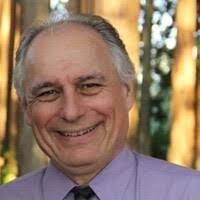
Don Southworth served as minister of Unitarian Universalist congregations in California, Georgia and North Carolina and as executive director of the Unitarian Universalist Ministers Association. He earned his M.Div. in theology/theological studies from Starr King School for Ministry.