
In the movie The Lion King, Simba, heir to the throne of his father, King Mufasa, flees from the Pridelands kingdom when his father is murdered by his uncle, Scar.
Deep in the safety of the jungle, Simba joins up with two characters, Timon and Pumba, whose philosophy of life is “Hakuna Matata”, a term which means “no worries.” It is a laid back, have-a-good-time, play-it-safe attitude. Simba buys into this for many years, enjoying a life, not only with no worries, but also no responsibilities.
Meanwhile, under the dictatorship of Simba’s wicked uncle, the Pridelands falls into ruin, famine and despair.
Then one day the baboon, Rafiki, the ‘holy man,’ tracks Simba down and offers to lead him to a place where he will meet his dead father. Intrigued, the young lion follows Rafiki through the twisted roots of ancient trees until he reaches a clearing. There, in the clear night sky, Simba remembers his roots. He has a moving vision of his father, who laments, “You have forgotten who you are, and therefore, you have forgotten me.”
Simba re-discovers who he is: He is Mufasa’s boy, the son of the king. And he returns to the Pridelands to liberate his people and take his rightful place as their king.
In the book of Exodus, the Israelites forgot who they were. Turning to the worship of a golden calf, they quickly adopted “Hakuna Matata” as their motto. They turned from the worship of the God of their ancestors, whose mighty love and power liberated them from Egyptian slavery, to worship a false, easy god. This was a god of their making, a god who demanded nothing of them, one that looked impressive on the outside, but, in reality, was a lifeless, loveless thing, unable to provide anything for them. In his hurt and anger, God threatens to punish them severely.
They had forgotten who they were, children of the King of the Universe. Therefore, they had forgotten God, their Father, who had set them free. Yet Moses interceded for them. Yes, they deserved punishment for their blindness and stupidity. God had every right to punish them. Yet Moses interceded for them. He didn’t make excuses for their wrongdoing. But he knew God’s mercy was as great as his justice, so he pleaded for mercy for the people. And “the Lord relented in the punishment he had threatened to inflict on his people.”
We, too, often wander away. We forget who we are. We easily forget that we are royalty — every one of us. We are princesses and princes, children of the King, Lord of Heaven and Earth! We deserve punishment for our forgetfulness, our blindness and stupidity.
Enter, Jesus. Like Moses, Jesus interceded for us. He knew we deserved punishment for our sins, for the misery and pain we cause ourselves, each other, even the other creatures with whom we share this planet. But Jesus is god; he is mercy itself. And since we could not save ourselves, since we could not buy ourselves back from the grip of sin, he did it for us.
Stripped naked before his enemies and friends, nails tearing through his wrists and feet, Jesus was crucified, calling us to look at him, to see how deeply we are loved, how passionately God wishes us to return to him. The crucified Jesus reminds us, in every wound, every drop of blood and sweat, spittle and love-forged tear, just who we really are, and how great is the mercy that awaits all who come home.
The world will tell you, “You are merely a number in a vast computerized society. You are a nameless nobody, worth nothing. You are here to labor and struggle and toil for a crumb of happiness, a few dollars in the bank, for 60, 70, 80 or more years, only to end up leaving all behind and residing cold and forgotten six feet beneath the dark earth.”
But Jesus, Son of the Living God, your Brother, drenched in his own blood, he who, on the cross, appeared to everyone a failure, hangs before each one of us and reminds us, in his suffering, that we are loved. We are the beloved children of a merciful God, whose love for us never changes, whose desire for us never stops, whose passion for us never fails, and whose willingness to forgive our sins will never end. We were created for a purpose, to give glory to our Creator, to tend to those who need our help, and ultimately, to spend eternity with him and them. In describing what awaits us, St. Paul says, “Eye has not seen, ear has not heard, neither has it entered into the imagination what God has prepared for those who love him.”
Have you forgotten who you are? Have you turned from the God who saved you from eternal death and loneliness so you could, instead, worship before the golden calf of sports, the calf of sex, the calf of disobedience, the calf of popularity? If so, look at the crucified Jesus, your Big Brother. Come to him. Accept his love and liberation and forgiveness. Remember who you are, because someone is waiting to receive you — with open arms.
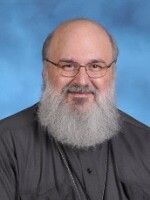
Tom Yeshua is the pen name of Thomas E.L. Cloutier OFS, a transitional deacon who taught theology for 30 years at Nashua (N.H.) Catholic Regional Junior High School. He earned a bachelor’s degree from Don Bosco College in Newton, N.J., and a master’s in divinity and theology from St. John’s Seminary in Brighton, Mass.