
Temple United Methodist Church, San Francisco, Calif.
Reading: Matthew 7:1-5
You get what you give. That’s one of the basic rules of God’s Kingdom.
Today’s scripture in Matthew says, “Don’t condemn others, and God won’t condemn you.” You get what you give. “God will treat you exactly as you treat others.”
Think of it! You do have control over your life! You can control what happens to you by the way you treat others. Be generous, and you will receive generosity. Be loving, and you will receive love. Be hateful, and you will receive hate. Be judgmental, and you will receive the judgement of others.
Now, it doesn’t always work that way, but for the most part, it does. In fact, it works so often that Jesus made it into a basic rule which the church now calls the Golden Rule — “Do unto others as you would have them do unto you.” Our phrase about judging others is also found in Luke along with the Golden rule and several other suggestions about how to apply the idea that you get what you give:
- Love your enemies.
- If someone slaps you on one cheek, turn the other one.
- If someone wants your coat, give them also your shirt.
- Lend money without expecting to get paid back.
Author Robert Fulghum has made a lot of money writing a modern book on this ancient truth. He called it All I Ever Really Needed to Know I Learned in Kindergarten. This is what he learned:
a. Share everything.
b. Play fair.
c. Don’t hit people.
d. Put things back where you found them.
e. Clean up your mess.
f. Don’t take things that aren’t yours.
g. Say you’re sorry when you hurt somebody.
h. Wash your hands before you eat.
i. Flush.
j. Warm cookies and cold milk are good for you.
k. Live a balanced life.
l. Learn some and think some and draw and paint and sing and dance and play and work every day some.
m. Take a nap every afternoon.
n. When you go out into the world, watch for traffic.
o. Hold hands and stick together.
p. Be aware of wonder.
q. Remember the little seed in the plastic cup. The roots go down and the plant goes up and nobody really knows how or why, but we are like that.
r. Goldfish and hamsters and white mice and even the little seed in the plastic cup …they all die. So do we.
s. And remember the book Dick and Jane and the first word you learned, the best word in the whole world: LOOK.”
Then he comments:
Everything you need to know is in there somewhere — The Golden Rule, love, basic sanitation, ecology, politics, and sane living. Think what a better world it would be if we — all the world — had cookies and milk about 3 o’clock in the afternoon and then lay down with our blankets for a nap. Or if we had a basic policy in our nation and other nations to always put things back where we found them, and cleaned up our own messes. And it is still true, no matter how old you are, when you go out in the world, it’s best to hold hands and stick together.
Basic stuff — you get what you give.
So in our scripture, Jesus is telling us how WE can help bring about the Kingdom of God on earth as it is in heaven: Don’t judge others, and we won’t be judged. What we give changes the world, and it reveals who we are and creates what we become.
We basically have two choices in life — we can approach it with a closed fist and a pointed finger, or with an open hand. You get what you give, and you are and become what you give.
Freud was one of the three great thinkers that developed the thought of the modern world. The other two were Karl Marx and Albert Einstein. Freud said that there are two basic drives in people — libido, and aggression. Our libido is that which draws us together, including our sexual urges, and aggression is that which pushes us apart. We all want both. There are many times we are attracted to people, and there are many times we are repelled by them, and push them away.
And what we give is what we get. If we are attracted, most often — if the relationship is real — they are attracted to us. But if we push away, most often they push us away. Jesus said it is better to attract than to repel, better to love, than to hate. I agree.
Pointing a finger is one way we repel others. Sniping at the people we live with, dismissing whole groups of people — drug addicts, atheists, the rich, the poor, those with AIDS, those without full body functions, bitterly resenting those who make it when we don’t, complaining when others don’t do it or see it our way, looking at the world as if it is lacking in much instead of being filled with plenty — all such patterns of finger pointing are ways which we use to push people away.
Such actions build up walls between people, create canyons between groups, isolate us from others and ourselves, and turn what could be the Kingdom of God into feudal fiefdoms of warring camps. Pointing fingers always points the way toward battle, and not toward peace. What you get is alienation because what you gave was separation.
But there is more. Finger pointing almost always shows us something of ourselves that we don’t want to face. A reformed alcoholic friend of mine once said he couldn’t give up the bottle until he learned that when people were pointing fingers at him, there were three pointed back at themselves, and their comments said more about their own problems than about his.
I’ve thought much that comment over the years, and it is almost always true. I remember several years ago in my parents house when we had gathered for a family conference, Vicki was reading the Readers Digest while we talked. Later, In private, I pointed the finger and said, “How could you do that? You gave the impression you just didn’t care!” It wasn’t two months later that we were in her mother’s home in Wyoming, and she caught me reading a novel during a family conversation. Almost always, the faults we see in others simply reveal faults in ourselves which we haven’t yet dealt with.
So by pointing a finger, we are putting onto others the problems we need to deal with ourselves. So Jesus said, “You can see the speck in your friend’s eye, but you don’t notice the log in your own eye.” Pointing the finger of judgment is a very dangerous practice. When you want to point a finger, stop! Admit who you are and what you feel! Confess at least to yourself, and hopefully to someone else, your self-righteousness! And ask for help!
So it’s best not to be judgmental — toward others because of the gulf it makes between us, and for ourselves, because of the liar it often makes of us.
The way to react, therefore? The way you have to build the kingdom of God? The power God has given to you for good? Practice non-judgmental acceptance. And the world around you changes. Instead of pushing people away, pull them toward you. That is how to change your life as well as the life of those around you.
This last week a United Methodist pastor in Nebraska, Rev. Jim Creech, has been on trial for performing a ceremony of Holy Union between two women. He had notified his church that was going to do so, and had notified his bishop. But we as a society in general and as a church in particular have a hard time with our own sexuality. We have not resolved the many aspects of what we, personally, feel about being men and about being women. So we point the finger of judgment.
With abortion issues, we not only point fingers and shake fists, we plant bombs. And with issues about Gay and Lesbian rights, we not only point fingers and shake fists, we yell out names and close doors and bring legal action. So it has been done in Nebraska. We all feel like doing so when something we are not sure about threatens to undo what we think we are sure about. Judging others helps us feel good about our insecure selves. But you are what you give.
However, non-judgmental acceptance can change the world. Several years ago, I performed a Union between two women who I think have never attend this church. One had been abused and had been in and out of relationships all her life. We will call her Sally. She had learned to point fingers, to blame others for her problems. She would close her fist and lash out, so much so they had a punching wall which she could strike when angered. She had become rough and coarse so as not to be hurt any more. She had learned to push people away before they got close enough to hurt her.
So as is my custom with any couple, I asked the women why they wanted to promise themselves to each other. The more gentle of the two said, “So Sally will know I will never leave her.” Sally said, “You mean you are never going to leave me?” “Yes,” her beloved said, “I will never leave you.” “You mean there’s nothing I can do to make you leave?” Sally asked. “No!” came the reply, “I am going to stay by you no matter what you do to me.”
Then Sally, in what is one of the most religious moments of my life, said, “Then I’d better change, so I can become more lovable to you. Because, I love you, too.”
Non-judgmental acceptance is the only way to change someone. Finger pointing doesn’t work; fists don’t work; an outstretched hand does. You get what you give.
Judge not, lest you be judged.
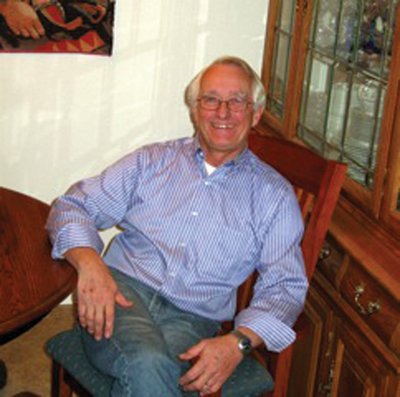
A fourth-generation Methodist pastor, Rev. Dr. Paul Sweet retired to Scotland after 40 years of ministry. A native of San Jose, Calif., he earned a bachelor’s degree from the University of the Pacific and a graduate degree from Claremont School of Theology.