
Stories of faith
As a child my faith was constantly bolstered by stories, both fiction and non-fiction, of those whose lives had been touched by Jesus. The Man Born To Be King a play-cycle on the life of Jesus written by Dorothy Sayers and presented by the British Broadcasting Corporation between 1941 and 1942, and later presented annually by the Australian Broadcasting Commission, deeply imprinted the life of Jesus on my mind during my childhood. Novels by Lloyd Douglas provided worlds in which one could live and breathe Christian experiences. The Robe, The Big Fisherman, Dr Hudson’s Secret Journal, Forgive Us Our Trespasses became tools to mould my concept of what a Christian life should demonstrate. In my teens A Man Called Peter and other books by Catherine Marshall became my constant companions.
Then I discovered the Dutch author, Corrie ten Boom, who told harrowing stories of those, like herself and her family, who were dispatched to concentration camps during the Second World War. The simple tales of demonstrated faith and the outcome of salvation gained in these cruel conditions would reinforce my belief regarding the behaviour expected of those who claimed the name of Jesus. Books about Brother Andrew and his crew smuggling Bibles into “closed” countries, and testimonies drawn from the lives of such as Watchman Nee all presented a two-pronged message of lives lived in faith and the will to “dare” for Christ and the Gospel.
When I commenced the studies toward my degree and subsequent ordination, I encountered different facets of Christian thought and experience. Feminist classics such as Not In God’s Image, edited by Julia O’Faolain and Lauro Martines, together with feminist theology works such as Elizabeth Fiorenza’s In Memory Of Her made me rethink my Pentecostal unquestioning acceptance of women’s subservient roles. Matthew Fox, John Spong, Dietrich Bonhoeffer, Hans Kung, Soren Kierkegaard and Pierre de Chardin Teilhard induced a will to re-read with new eyes familiar words of Scripture. Two German theologians, C.F. Keil and F. Delitzsch, challenged accepted interpretations of the Old Testament, and William Barclay expounded and explored the New Testament in his commentaries. My life-partner introduced me to Jean Vanier and The Broken Body, and my journey into practical and experiential Christianity focusing on social issues began in earnest. Voices Of The Silenced by Darryl M. Trimiew and Standing With The Poor edited by Paul Plenge Parker, together with the experiences of an intercessor such as described in Rees Howells, Intercessor, brought together the ministry of those living with and serving all Christ’s disadvantaged people , thus combining prayer and practical “hands on” Christianity.
Books such as these, together with life experiences and my faith journey, prepared me for an interview by Dino Hodge in late 1995 for a new book he was editing. It was not until publication of this book, The Fall Upward, launched during Pride Week 1996 in Sydney, that I became aware of the real importance of this book as part of our history as members of the Australian gay and lesbian community. The book provides eighteen gay men and lesbians with an opportunity to describe their personal spiritual journeys. The first nine interviews involve those who have chosen a Christian path, the other nine interviews are with those who have chosen differing spiritual lifestyles. “The Fall Upward” puts the lie to claims that, as gay men and lesbians, we are rejected by God, and/or that we reject all forms of spiritual direction. These lies have been used by religious institutions to alienate us as individuals and as a community from our spirituality for far too long. Each person interviewed has known considerable discrimination, some have experienced both physical and sexual abuse.
But through the various examples of pain and disappointment, the testimony shared has been shaped by individual spiritual realities. Just as Jacob wrestled an angel, so each person interviewed has had to wrestle with the seemingly conflicting realities in their lives that they were homosexual and that they also lived lives with intense spiritual dimensions. For those of us who were able to “come out” both as lesbians/gays and as spiritual people, this book has caused us to rethink our own truths, and has provided a reference point for many who want to believe that they can be homosexual and spiritual. These stories have a universal flavour, and could have been told by lesbians or gays throughout the entire western world, for geography plays no part in shaping the circumstances of the oppression we have known, the prejudices cultivated against us, or in our response to that still, small, inner voice of God in our midst.
In a review of the book, Associate Professor Robert Aldrich from the University of Sydney says: “There is a widely-held view that sexuality – particularly gay and lesbian sexuality – does not have a spiritual dimension.
In debunking this myth, the lesbian women and gay men interviewed for this important historical and sociological work offer insight into a rich diversity of religious experience which has shaped, and continues to influence, their sexual and spiritual odysseys.
The answer to the question, “What should we live by?”, quoted by one of the interviewees, is the theme of this book. Hodge’s sensitive questioning has produced thoughtful and often very moving testimonies which serve as an inspiration to readers to reflect on their own lives and beliefs.”
Before writing this article, I re-read parts of the book, and I continue to be amazed at God revealed in so many forms, so many experiences, in the lives of lesbians and gay men as we continue to stretch out our hands and spirits to become the fulfilled and spirit-filled persons God has always intended us to become. From responses we have received, we are aware that the addresses and phone contact numbers many of us chose to supply have been as beacons of light shining forth across waves of the darkness of ignorance to those seeking the truth.
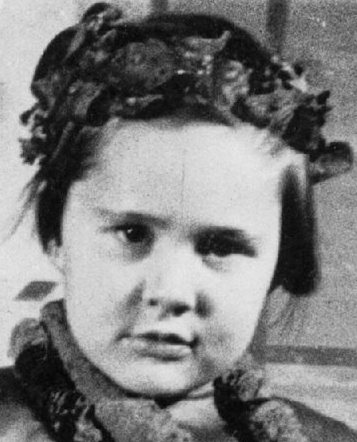
Rev. Vera I. Bourne of Lismore, N.S.W., Australia, served as Outreach Clergy at Christs Community Church.