
Paul Hackett is an Iraq War veteran. This grandson of a union man and son of a traveling salesman & schoolteacher fought in Ramadi and Fallujah and returned to his Ohio home in 2005.
He’s also committed to “retooling” the Democratic Party and, from the moment he returned from Iraq, doing something about it – running for office. Hackett captured national attention last summer by speaking out against President Bush’s war policy. He speaks more forcefully against Bush’s policies than most Democratic leaders have the courage to do. By doing so Hackett brings people and their votes to the Party who weren’t the usual assured party base.
That’s why he almost beat Republican Jean Schmidt (who said on the House floor to decorated Viet Nam Veteran and Pennsylvania Representative Jack Murtha, “Marines don’t cut and run.”). Hackett lost with 48% of the vote in a special election for the House of Representatives in the 57th most Republican district in the country, the 2nd district of southwestern Ohio, last year – in 2004 Bush received nearly two-thirds of the district’s votes.
So there was excitement in the Ohio air when he announced that he would run for the US Senate, challenging GOP Senator Mike DeWine. Supporters were raising funds from thousands of individuals. His fundraising was twice that of Illinois Senator Barrack Obama at the same stage in Obama’s campaign.
Hackett stood out from the Democratic crowd because, as Mother Jones magazine noted, he was “the rarest of political animals – a fighting Democrat.” Listen to just some of his responses to Bush’s State of the Union speech:
“A former oil executive telling us we are addicted to oil is like a tobacco company executive complaining that their employees take too many smoke breaks…The President should stop blaming Americans and put pressure on his cronies in the oil industry to develop and sell the technology we need to become less energy dependent on foreign and domestic oil.”
“The last time this President ‘fixed’ healthcare, senior citizens were left with a confusing Medicare prescription drug plan.”
“President Bush recycled ideas from State of the Unions past and threw in some empty political rhetoric. He helped spread the crisis of confidence Americans have in their government by ignoring rampant corruption and cronyism on Capitol Hill and the White House. It is unfortunate that the President did not take head on the Republican culture of corruption with a true plan for reform.”
But this isn’t what it takes to get the approval of Democratic leadership. Oh, no. Bringing new voices and new voters into the Party threatens the elite Democratic establishment.
Hackett’s tremendous showing was clearly going to mean there would be a competitive primary campaign against Democrat Sherrod Brown, a career politician with insider connections to the entrenched Party operatives. Predictions were that Brown would announce raising only slightly more than Hackett despite serving in public office for more than 30 years and being the current US Representative from Ohio’s 13th district.
If you’ve paid attention to how the Democrats work, you could guess what would happen. A fresh, plain-speaking sense of outrage is too much for the Democratic Party today. The Democratic Party would push him aside for the “nice,” safe insider.
And that’s what they did. Hackett withdrew in mid February from the Senate race, he says, “only after repeated requests by party leaders, as well as behind the scenes machinations, that were intended to hurt my campaign.”
Jennifer Duffy, managing editor of the nonpartisan online political analysis, “The Cook Report,” explains that Hackett “became an icon to the liberal bloggers because he says exactly what they have wished they would hear from a politician.
On the other hand, the Senate is still an exclusive club, and the party expects a certain level of decorum that Hackett has not always shown.”
Hackett was outraged at learning that party leaders had been calling his donors to ask them not to contribute to his campaign.
“For me,” Hackett said, “this is a second betrayal. First, my government misused and mismanaged the military in Iraq, and now my own party is afraid to support candidates like me.”
I’m sorry, Paul, but welcome to today’s Democratic Party. You’ve learned an important political lesson. This isn’t about principles. Anyone and any principle is expendable if they fear it’s not winnable.
National Democratic leadership is afraid of people who speak their mind. Even with Howard Dean as Chair of the Democratic National Committee, it’s clear that few Democratic leaders are willing to support someone who speaks convincingly out of their values.
You see, the party’s goal is to keep itself going. It’s caught in institutionalism as it chooses anti-choice candidates because the millionaire strategists who’ve given bad advice before, and who’ll work for any party if it pays well, still believe Republican-lite will win.
LGBT people have learned that Democrats will betray their interests if the politicians are afraid it might cause them to lose. People of color have learned that the party they believe is their only hope won’t necessarily push their issues – remember how the Congressional Black Representatives couldn’t find a single white senator to support their 2000 challenge to the stealing of the presidential election. Women are watching closely as the Party marginalizes a previously forceful stand for women’s personal choice.
The Party definitely needs retooling, Paul. It needs new blood. It needs leaders who don’t personally benefit from the economic strategies of the Bush administration. It needs people who speak for us. But they are, like you, forced out. The Republicans already have a party. I’m not rich enough to benefit from its policies. It’s called the Republican Party.
I keep hoping that there will be another political party that won’t betray people to maintain itself. Watching the Democrats use, but move further from, their historical constituencies and cave in again and again to the values of privilege like “decorum” leaves the unprivileged behind and betrays people who could be the Party’s future — like you, Paul.
I still could vote Democratic if that’s my best choice, but I can’t in good conscience identify as a Democrat.
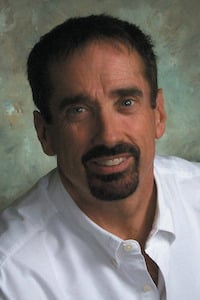
Professor Emeritus of Religious Studies at the University of Kansas where he taught for 33 years and was department chair for six years, Robert N. Minor (he/him), M.A., Ph.D is the author of 8 books as well as numerous articles and contributions to edited volumes. He is an historian of religions with specialties in Biblical studies, Asian religions, religion and gender, and religion and sexuality. His writing has been published in Whosoever since 2005 and he continues to speak and lead workshops around the country. In 1999 GLAAD awarded him its Leadership Award for Education, in 2012 the University of Kansas named him one of the University’s Men of Merit, in 2015 the American Men’s Studies Association gave him the Lifetime Membership Award, and in 2018 Missouri Jobs with Justice presented him with the Worker’s Rights Board Leadership Award. He resides in Kansas City and is founder of The Fairness Project.