
Readings: 2 Timothy 1:7, Matthew 25:31-46
There is a story told of a young man in a cabin who prays to God and asks God what He wants him to do with his life. God tells him to look at the massive rock that is in a valley beneath him and every day for the rest of his life he is to push that rock. The young man does as he is told by God and does so for about twenty years. After twenty years of frustration, the man then prays to God again and says to God, “I’ve done what you’ve told me to do and I haven’t even moved that rock one millimeter.” God answers him and says, “I didn’t tell you to move that rock. I told you to push it. Look at your hands and arms and how strong they are. Look at the strength of your body that you obtained by pushing on that rock all of these years.”
As Dorothy Day, co-founder of the Catholic Worker, once said, “God doesn’t ask us to be effective. He asks us to be faithful.” Unfortunately, in my experience, many “liberal” or “progressive” people lack the passion, the fortitude, the discipline, the “sticktoitiveness,” of those who would seek to curtail or eliminate the rights of LGBT people and their families.
Fundamentalists have it all over us because of their zealousness in organizing for a cause they think is right, and they are able to mobilize people to boycott companies that have LGBT friendly policies, and mobilize people to go and vote for those politicians and legislative bills that are consistent with their prejudices. Moreover, most fundamentalists, despite their skewed view of the Bible, are usually far more biblically literate than many progressive Christians and, therefore, have the edge in what discussions, debates, and rhetoric occur that are put forth in the media, over which they have a monopoly.
Progressive Christians, those who seek to apply biblical principles to contemporary social issues, rather than blindly attempt to impose ancient biblical and cultural practices on contemporary society, frequently lack not only the necessary discipline to successfully address the corporate sins that scream out to God for redress, but we frequently fail to get our message defining Christianity across to many people, due to that relative lack of discipline, our relative discomfort in witnessing in the world, as well as to our relative lack of biblical literacy.
Therefore, there has been an upsurge in fundamentalist thinking in professed “Christian” circles; many people equate that fundamentalist thinking with Christianity itself. The Gospel of grace, faith, love, peace, reconciliation, and inclusiveness has, in many people’s minds, been morphed and/or twisted into a false gospel of legalism and perfectionism that is antithetical to the true Gospel of God’s grace visited upon those who trust Him over and above seen circumstances, and who love other people. And the seeming success of the transmission of that false gospel can largely be laid at the feet of those Christians who have lacked the discipline, the drive, and the biblical literacy necessary to meaningfully communicate and practice the true Gospel.
One of the main attractions of fundamentalism is people’s fear of the unknown, and a desire to have assurance that there is “certainty” in their lives. Fundamentalists, by their selective interpretation of assorted Scriptural passages, frequently devoid of their contexts, promise such certainty, even if that certainty is, in reality, an illusion. Nevertheless, many people who find it impossible to tolerate or cope with ambiguity, with relatively rapid economic, technological, and social changes, and with the many grey and multidimensional aspects of life, find a safe haven in fundamentalism, along with those who have rather malignant reasons for their membership, as well as the seeking after material, psychological, and political gains.
It is therefore most important that progressive Christians, particularly those in the LGBT community, be of a disciplined mind, utilizing their self-discipline that is given to all of God’s children, as stated by the Apostle Paul in the first reading tonight, to push that rock of prejudice, stigma, discrimination, and oppression. It must be remembered that the oppression visited upon the LGBT community serves vital psychological, social, and political needs of the oppressors.
LGBT people are viewed as “safe” targets to persecute, given the fact that at this time in history, it is not deemed politically incorrect or inappropriate to rail against them in the name of “family values,” “tradition” and “morality.” These specious reasons, these irrational reasons with their equally irrational religious and secular justifications, enable the oppressors, many of whom preach the false gospel of legalism and perfectionism, to reinforce their arrogance and feelings of superiority that are diametrically opposed to the very essence of Christianity itself.
Moreover, beyond the psychological needs that such oppression meet, such oppression meets the social needs of those who feel they need to have their one dimensional views of God, the world, and of people reinforced. If there is a law in social life it is the following, as discovered by the famous nineteenth century sociologist, Emile Durkheim: when you have a threatening out-group, the in-group will unite to protect itself against it. Therefore, those who feel the need to oppress other people must create one or more out-groups in order for their in-group solidarity to be maintained.
In the fundamentalist mind-set, there must be an “us,” and for there to be an “us” there must be a “them.” Women, African Americans, and immigrants have served this function. Now, particularly among those with a fundamentalist mind-set, that role is served by the LGBT community.
The irrationality of focusing on who loves who and who sleeps with who, to the virtual exclusion of helping the helpless and to the virtual exclusion of addressing those corporate sins and injustices all Christians are called upon to relieve, as seen in our Gospel reading, shows just how desperate fundamentalists are to fill their psychological and social needs to reinforce their rather one dimensional view of life, their arrogance, and their feelings of superiority.
In our Gospel reading, Jesus makes it crystal clear that “love” and “the relieving of others’ sufferings” define a Christian as they define the Christian life. We see how fundamentalists are usually incapable of exhibiting or even having such love, so they have perverted the Gospel by the fact that they emphasize one’s “theology” as the criterion for being “saved” or “born again.” Because people who live in fear must spend virtually all of their psychic energy on oppressing one or more out-groups, they don’t have the psychic energy, or even the inclination, to live up to Jesus’ command that we love each other.
Therefore, one’s theology and Christology become all important in their eyes, because “love” is in short supply when one must spend virtually all of his or her energy “keeping it together.” And the way most fundamentalists “keep it together” is their constant need for an out-group against which to discriminate!
These realities, to say nothing of the perversion of the Gospel message to the point that Christianity has been redefined in the minds of many into a legalistic religion, its very antithesis, should embolden LGBT Christians and allies to have the self discipline to continue to fight against this corruption. We must be as faithful, bold, disciplined, and coordinated as those who profit from hate and hate-mongering. We must come to see that our psychological, social, and spiritual needs are congruent with our engaging in that fight!
When about twenty three percent of LGBT people voted for Bush in the last election, when so many LGBT people are rather indolent concerning the oppression of their own community, even as in some cases working for politicians who make political hay out of that oppression, it is high time to take to heart the analogy to African Americans that Malcolm X pointed out during the civil rights era in the 1960s. He made a distinction between the “house Negro” and the “field Negro.” The house Negro ingratiated himself to his master, and sought his favor. The field Negro wished for the destruction of his master and subverted him every chance he had. Malcolm exhorted his listeners to realize that a major enemy fighting against their liberation, the “house Negro,” existed in their own community!
As Christians we are called upon to love our enemies! However, that love should not connote or dictate that we emphasize unity, as is most notably now occurring in the Anglican Communion, over and above justice and the relief of oppression of all suffering people. “Love” is expressed precisely in our disciplined quest for such justice and relief! Love and justice should never be sacrificed for a so-called “unity” that hinges on, and is contingent upon, the oppression of any of God’s children.
To the degree that we don’t rise to the challenge, to the degree that we lack the “sound mind” or the “self discipline” necessary to push the rock off of the oppressed, we have not only failed those who suffer, but we have failed and betrayed Jesus Himself.
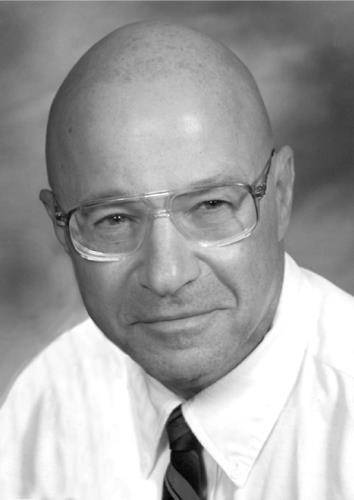
Professor Emeritus of Sociology at California State University, Chico, Rev. Dr. Jerry S. Maneker served as an ordained priest in the Congregational Catholic Church, a division of the Independent Catholic Churches International (ICCI). For many years he published a weekly column in the Sacramento Valley Mirror titled “Christianity and Society” where he dealt with a variety of social issues from a biblical and sociological perspective. He also published a blog called A Christian Voice for Gay, Lesbian, Bisexual and Transgender Rights and the website Radical Christianity.