
Editor’s note: For more on this and the other “clobber passages” commonly used to justify scripture-based condemnation of homosexuality, you may also enjoy our essay series “The Bible and Homosexuality.”
The supposed ‘Sin of Sodom’
The story of Sodom and Gomorrah is the biblical story most often used to condemn homosexuality. Yet as popular as Genesis 19 is with religious zealots, this story is the weakest of all passages used against gays and lesbians. A close reading of the story, along with some simple research on the meaning of the words used, proves this.
For starters, the word “sodomite” today is generally used to reference a person who participates in anal (or, depending on your local laws, oral) sex. Yet at the time of this Biblical story it meant something entirely different. The Hebrew word kudash (plural kadeshim), which we translate as “sodomite” today, actually meant “hallowed” or “sacred” in its original sense.
According to author John Boswell, kudash referred to “prostitutes in pagan temples” — the sexual practices of the pagans having long been considered idol worship because of their connection to the pagan religious rites.
In fact, diligent research shows most early theologians found no biblical connections to homosexuality until after scripture was translated from Hebrew and Greek to English. The word “homosexual” didn’t actually appear in Bible translations until the year 1946.
(For a more complete word study, read Boswell’s book, Christianity, Social Tolerance, and Homosexuality: Gay People in Western Europe from the Beginning of the Christian Era to the Fourteenth Century.)
Sin of Sodom: Background
While most anti-gay preachers begin with Genesis 19, to get the rest of the story you must start in Genesis 18. In that chapter, the messengers are sent to Abraham to inform him of his impending fatherhood (yes, at the age of 90 or so) and to let him know about the impending destruction of Sodom and Gomorrah. Abraham bargains with the messengers to save the cities.
The point here is that the fate of the cities is already sealed. Chapter 19 is nothing more than a report of how the inevitable destruction unfolded.
In the Jewish tradition of the time, hospitality was of the utmost importance. Lot had an obligation to protect his guests when it became obvious the locals intended to harm them. Lot offered his daughters instead. So no matter how one views homosexuality, this final act is about rape, a crime of violence.
So, what was the “sin of Sodom”? If you search the scriptures, it was actually a handful:
- Deuteronomy 29:22-28 — serving false gods
- Deuteronomy 32:15-19, 21-25 and 31-33 — apathy, sacrifice to demons, idolatry and gluttony
- Isaiah 1:2-4, 9-10, 20 and 23-31 — forsaking God, showing contempt to God
- Isaiah 3:8-11, 15 — oppression, discrimination
Finally, the New Testament’s description of Sodom’s sins clarifies that they have more to do with the rejection of “the message” (Matthew 10:14-15, Matthew 11:23-24 and Mark 6:11).
Given the evidence, it’s easy to see how the destruction of these cities, which for years has been conveniently blamed on homosexuals, was caused by much deeper issues than sexual orientation. God’s wrath was brought down on them because of their cruelty, neglect, oppression, persecution of the poor, and idol worship.
The ultimate irony being that the true “sin of Sodom” remains quite evident even in today’s world. But the gay community, while perpetually treated as a scapegoat, is also still not to blame.
You may also enjoy:
You Are God’s Masterpiece: Celebrating 25 Years of Being a Whosoever
Bulletproof Faith: A Spiritual Survival Guide for Gay and Lesbian Christians
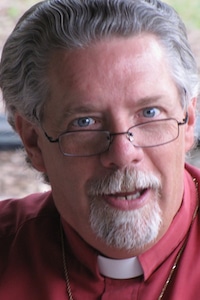
Editor-in-Chief of Whosoever and Founding and Senior Pastor of Gentle Spirit Christian Church of Atlanta, Rev. Paul M. Turner (he/him) grew up in suburban Chicago and was ordained by the Universal Fellowship of Metropolitan Community Churches in 1989. He and his husband Bill have lived in metro Atlanta since 1994, have been in a committed partnership since the early 1980s and have been legally married since 2015.